How to Forecast Sprint Delivery Risk With AI

The short answer
AI sprint forecasting reads the signals your team already generates — scope changes, cycle times, review latency, dependency shifts — and flags the sprints likely to slip before they do. For regulated teams, the value is twofold: earlier intervention on delivery risk, and an auditable record of the release decisions those forecasts informed. Start with the signals you already track; don't add ceremony.
The signals that predict slippage
Scope creep mid-sprint: work added after commit is the strongest early warning of a miss.
Cycle-time drift: tasks sitting longer in progress or review than their historical norm.
Dependency and blocker aging: unresolved cross-team dependencies that compound as the sprint runs.
Review and approval latency: PRs and approvals queuing signal a bottleneck the burndown hides.
From forecast to auditable decision
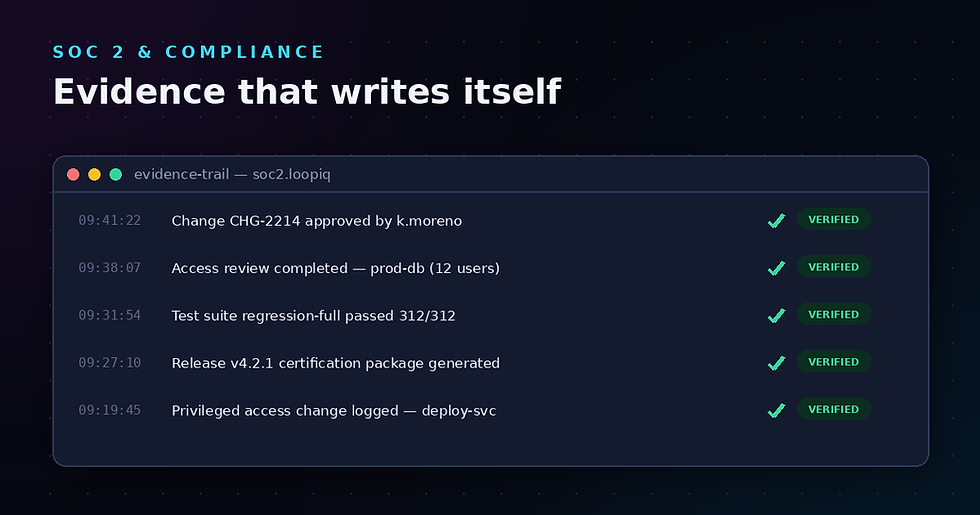
A forecast is only useful if it changes a decision — and in regulated delivery, that decision needs a record. LoopIQ turns sprint and delivery signals into early risk forecasts and keeps the planning context, approvals, and release evidence linked, so teams can act on risk and later show why a release shipped when it did.
FAQ
What is AI sprint forecasting?
Using AI to analyze delivery signals from sprint and workflow data to predict which work is at risk of slipping, early enough to act.
Do we need new data to start?
No — effective forecasting uses signals teams already produce in their planning and delivery tools. The win is interpreting them earlier, not collecting more.